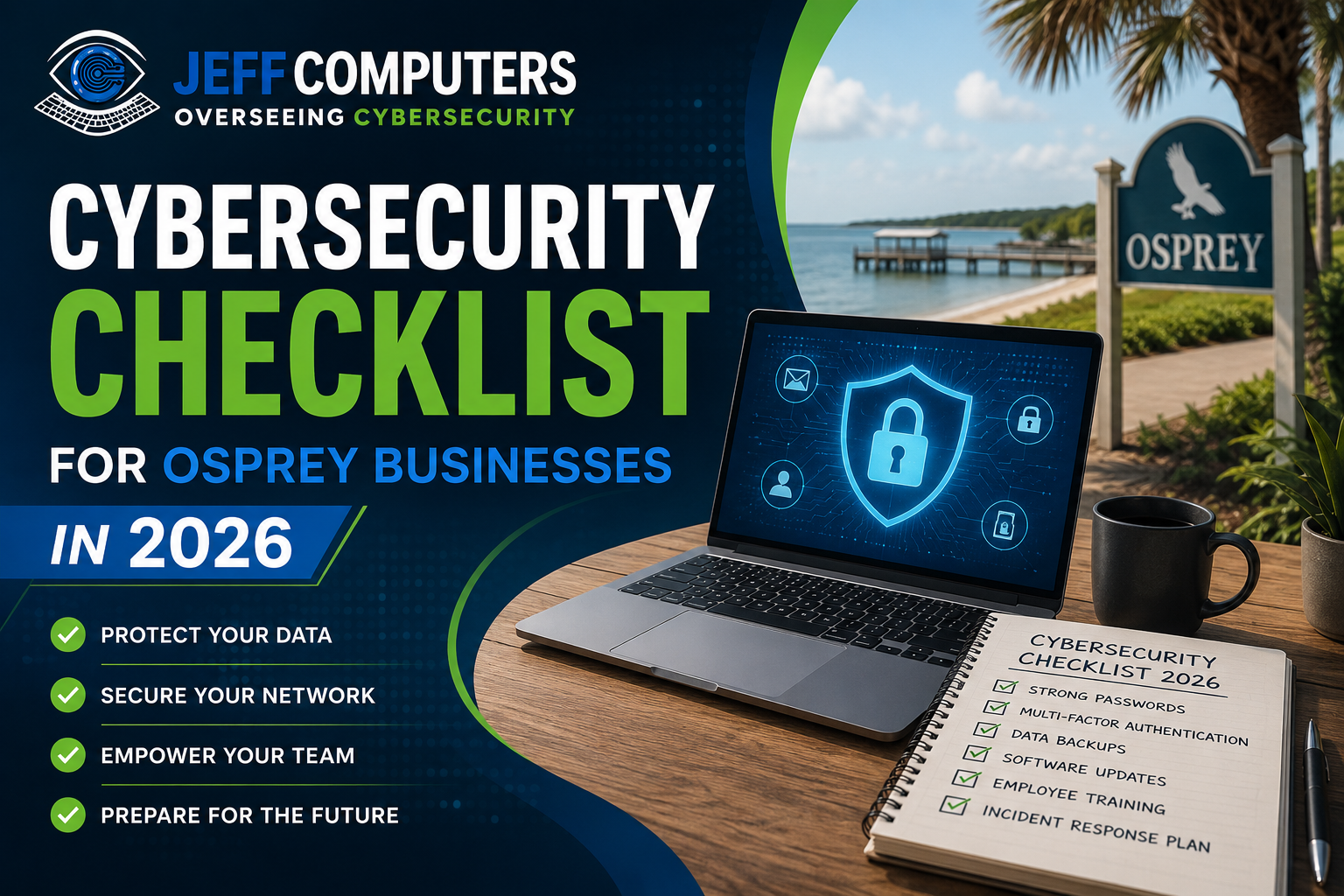
If you run a business in Osprey, FL, or anywhere along the Sarasota County coast, cybersecurity probably isn’t the first thing on your mind. You’re focused on customers, payroll, and keeping the doors open. But cybercriminals don’t care how big your business is or how long you’ve been open — small and mid-sized companies in Florida are targeted every single day, often because attackers assume smaller businesses have weaker defenses.
The good news: most cyberattacks don’t happen out of nowhere. There are almost always warning signs beforehand. Below are five red flags that mean it’s time to get professional cybersecurity Services Florida— before a small issue turns into a costly breach.
1. Your Team Keeps Getting Suspicious Emails
If employees are regularly forwarding you emails asking, “Is this real?” — that’s not a minor annoyance. It’s a sign your business is already a target for phishing attempts. Phishing remains one of the most common ways attackers gain access to business networks, and it only takes one click on a malicious link or attachment to compromise an entire system.
Warning signs to watch for:
- Emails impersonating vendors, banks, or executives asking for urgent payments
- Login pages that look slightly “off” when clicked from an email link
- Increased spam or emails with unusual attachments (invoices, shipping notices, etc.)
If this is happening more than occasionally, your business needs email security filtering, employee training, and a response plan — not just a company-wide “be careful” reminder.
2. You’re Still Using Outdated Software or Unsupported Systems
Running older versions of Windows, outdated point-of-sale systems, or software that no longer receives security updates is one of the fastest ways to become an easy target. Once a software vendor stops issuing patches, every newly discovered vulnerability stays open — permanently.
This is especially common among small businesses in Osprey, Nokomis, Venice, Laurel, and North Port that have older office setups or point-of-sale systems installed years ago and never revisited. If your IT provider (or the person who “handles computers” part-time) hasn’t talked to you about software updates recently, that’s a gap worth closing immediately.
3. You Don’t Have a Clear Backup and Recovery Plan
Ask yourself honestly: if your business’s computers and files were locked by ransomware tomorrow, how would you recover? If the answer is “I’m not sure” or “we have some backups somewhere,” your business is at serious risk.
Ransomware attacks are increasingly aimed at small businesses precisely because attackers know many don’t have tested backup systems in place. A proper backup strategy isn’t just having a copy of your files — it means:
- Backups stored separately from your main network (so ransomware can’t reach them too)
- Regular testing to confirm backups actually restore correctly
- A documented recovery plan your team can follow under pressure
Without this, a single attack can shut your business down for days or weeks — a cost far greater than the price of prevention.
4. You’ve Had Unexplained Slowdowns, Pop-Ups, or Account Lockouts
Cyberattacks don’t always announce themselves with a ransom note. Often, the first signs are subtle:
- Computers running noticeably slower than usual
- Unfamiliar programs or toolbars appearing
- Employees locked out of accounts they didn’t try to access
- Unusual login activity or password reset emails no one requested
These can indicate malware, a compromised account, or an attacker already inside your network gathering information before launching a bigger attack. If your team has brushed off these symptoms as “just a glitch,” it’s worth having a professional take a closer look.
5. You Have No Dedicated Cybersecurity Support At All
Many small businesses across Sarasota County rely on a single in-house employee who “is good with computers,” a part-time contractor, or no IT support at all. That might work for day-to-day troubleshooting, but cybersecurity is a specialized, constantly evolving field — new threats emerge weekly, and defending against them requires dedicated tools, monitoring, and expertise.
If your business handles customer payment information, personal data, medical records, or financial transactions and doesn’t have a dedicated cybersecurity plan, you’re operating with significant exposure. This is true whether you’re a boutique shop in Osprey, a medical office in Nokomis, a marina business in Venice, or a growing company in Sarasota or North Port.
Why Local Cybersecurity Support Matters for Florida Businesses
Florida businesses face some unique challenges: seasonal population swings, hurricane-related power and network disruptions, and a high concentration of small businesses in tourism, real estate, healthcare, and retail — all attractive targets for cybercriminals. Working with a local cybersecurity provider serving Osprey and the surrounding Sarasota County area means faster response times, on-site support when needed, and a partner who understands the specific risks facing businesses in this region.
Don’t Wait for a Breach to Take Action
If any of these five signs sound familiar, it’s time to talk to a cybersecurity professional in Florida— not next quarter, but now. Businesses throughout Osprey, Nokomis, Venice, Laurel, Sarasota, and North Port, FL trust local cybersecurity experts to identify vulnerabilities before criminals do.
Contact us today for a free cybersecurity risk assessment and find out exactly where your business stands.
Frequently Asked Questions
Common signs include unexpected account lockouts, unfamiliar software installations, unusually slow systems, and reports from customers or vendors about suspicious communications appearing to come from your business. A professional security assessment can confirm whether a breach has occurred.
Costs vary based on business size, industry, and current infrastructure, but most managed cybersecurity services are offered as predictable monthly plans rather than large upfront investments — often costing far less than the average cost of recovering from a breach.
Yes. Attackers frequently target small businesses specifically because they tend to have fewer security protections than large corporations, while still holding valuable customer and payment data.
Start with a cybersecurity risk assessment. This identifies your current vulnerabilities — outdated software, missing backups, weak email protections — and gives you a prioritized action plan.